Cooking Demos
Chilli Deserves the Same Appreciation as a Great Wine
Interesting fact:
Chillies began their journey in Central and South America more than 6,000 years ago, cultivated by civilisations such as the Maya and Aztecs. In 1492, Christopher Columbus carried them to Europe, and from there they spread along global trade routes into Africa and Asia. Because they grow easily in warm climates, they were quickly embraced and became central to cuisines around the world, even though they originated in the Americas.
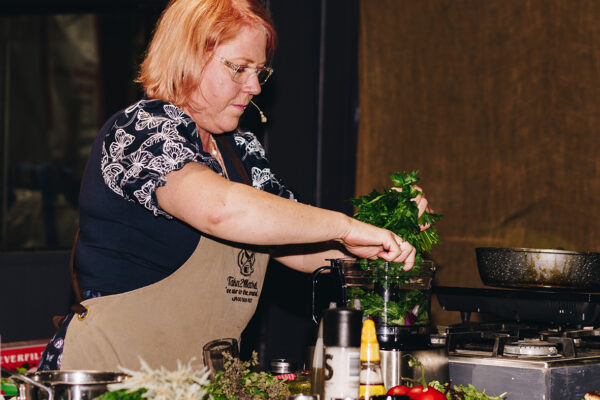
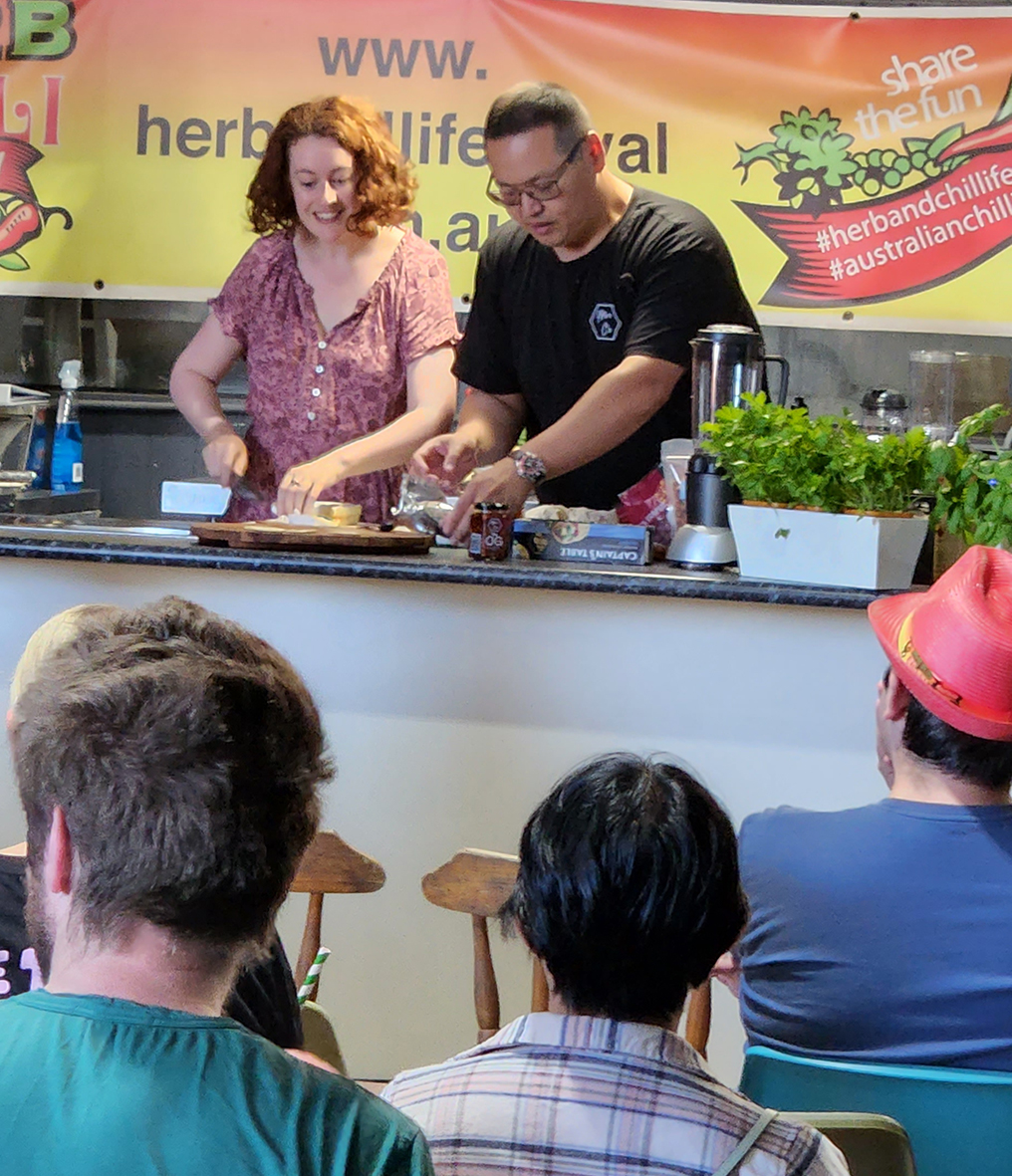
Welcome to the 2026 Herb and Chilli Festival demonstration kitchen. This year we have two guest chefs. Elia Donati (a visionary chef who inspires all around him) and regular chef Sally Meaden
The modern understanding of chilli is shifting. It is no longer about who can withstand the hottest pepper. It is about balance. About restraint. About knowing how flavour unfolds across the palate.
This year, we’re exploring how chilli appreciation has evolved. Like a fine wine, chillies are no longer judged by intensity alone. They’re valued for their origin, their character, and the experience they bring to a dish.
Chillies today are not treated as just heat. They are treated as ingredients with personality.
Modern cooking looks at chillies through four key elements: flavour, aroma, texture, and control of heat. Chefs select specific varieties for their unique profiles, not simply their Scoville rating. A jalapeño offers grassy freshness. A habanero delivers fruity, tropical notes with warmth. Bird’s eye chillies bring clean, sharp heat. Ancho chillies add smoky sweetness and depth.
Heat is layered carefully. Fresh chillies add brightness. Dried chillies deepen sauces. Fermented chillies introduce savoury complexity. Smoking and pickling enhance flavour while softening intensity. Infused oils allow precision and control.
Chillies have mild antimicrobial properties but mainly support preservation when combined with methods like fermentation, drying, salting, or pickling.
Chillies also offer notable health benefits. They are rich in vitamin C and antioxidants, which support immune function and overall well-being. The compound capsaicin, responsible for heat, has been linked to improved metabolism, circulation, and natural anti-inflammatory properties. In moderation, chilli can stimulate digestion and even trigger endorphins, creating that familiar sense of warmth and satisfaction.
Global cuisines have shaped this modern approach, influencing contemporary Australian cooking. Chillies are used to cut richness, lift sweetness, balance fat, and create contrast. They bring structure and clarity to a dish.
When handled thoughtfully, chilli is not just about spice and the “last man standing”. It is about flavour, balance, vitality, and the way it enhances both the dish and the dining experience.
I encourage you to come along to the Herb and Chilli festival Demonstration kitchen and to learn your chilli appreciation from the experts.
Sally Meaden
Herb and Chilli Festival Chef

PROGRAM
Saturday
Sunday
* These details are correct as of September 1st, but are subject to change.